
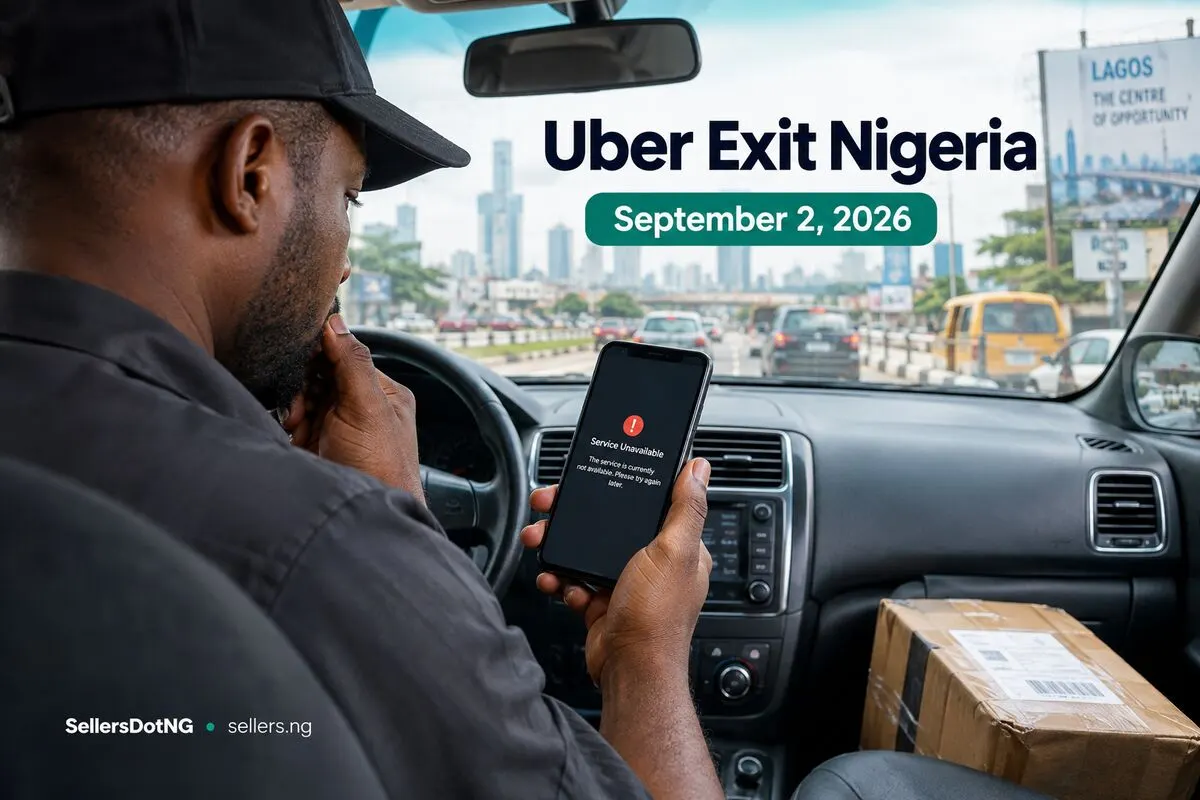
Uber Left Nigeria Without Warning — Now Drivers Are Stuck With Trips, Packages and Unanswered Questions
Imagine driving through Lagos in the middle of the afternoon. You have accepted a trip, you are already on the road, and a passenger's package is sitting inside your vehicle.
Then the app stops working.
You try again. Nothing.
You need the passenger's phone number. You need the destination address. You need the trip details. You need the record showing where the package came from and where it was supposed to go.
But the platform that contained all that information is suddenly no longer available.
That is the situation some Uber drivers say they faced when the company ended its Nigerian operations on September 2, 2026. The shutdown did not simply remove a ride-hailing app from Nigerian phones. For drivers who were already handling trips or deliveries, it created a practical problem that could not be solved by simply going offline.
What Happened to Uber in Nigeria on September 2?
Uber announced on September 2 that it was winding down its operations in Nigeria and Uganda effective that same day, ending a 12-year presence in Nigeria that began with its launch in Lagos in 2014.
The company said the decision followed a review of its business priorities and investment focus across Africa. Uber did not publicly identify a single specific reason for leaving Nigeria and said the decision was limited to Nigeria and Uganda.
Reports published that day described the communication to customers and drivers as an immediate-effect notice. The announcement was made on September 2, the same day operations were being wound down.
Uber's Help Centre was announced as remaining available for outstanding issues until September 23, 2026.
The Problem Nobody Wants to Talk About: What Happens to an Active Trip?
Stopping new ride requests is one thing. Shutting down a platform while trips and deliveries may still be in progress is another.
This is where the human side of the shutdown becomes particularly important.
Drivers have described situations in local online communities involving trips that were already underway when the platform became unavailable. Among the concerns being discussed are Uber Connect deliveries, where a driver may physically have a customer's package but rely on the platform for the customer's contact details, delivery destination and trip information.
These accounts circulating among drivers and riders should be treated as reports from affected users rather than as a complete independently verified record of every incident. But the underlying problem is straightforward: when a digital platform controls the information needed to complete a transaction, suddenly losing access to that information can leave people with unfinished obligations.
Uber Connect Makes the Situation More Complicated
Ride-hailing was not the only service Uber provided in Nigeria. The company's platform also supported package and delivery services, including Uber Connect and related package offerings.
That means an Uber driver's relationship with the platform could involve more than transporting a passenger from Point A to Point B.
A driver could also be physically carrying property belonging to another person.
Under normal circumstances, the app provides the information needed to complete that transaction. The driver can access the trip, identify the recipient, follow the destination and communicate with the customer.
When that digital connection disappears while the physical package remains in the vehicle, the problem becomes much more serious.
Drivers Are Suddenly Custodians of Other People's Property
Imagine having a customer's phone, documents, clothing, business merchandise or another valuable item inside your car while being unable to access the information that would normally tell you where to take it.
The driver may not know the customer's current phone number. They may not be able to reopen the delivery instructions. They may not be able to access the trip history or retrieve the destination from the app.
That creates an uncomfortable legal and ethical question: what is a driver supposed to do with somebody else's property when the technology that connected both parties suddenly disappears?
This is not merely an inconvenience. Depending on the circumstances and the value of the property, mishandling or losing an item could potentially expose the person holding it to disputes or liability. Drivers therefore have an understandable reason to be cautious rather than simply abandoning a package or handing it to an unknown person.
WhatsApp and Telegram Become Emergency Lost-and-Found Networks
When the official platform becomes unavailable, people often turn to the communities they already have.
That is reportedly what has been happening among some Nigerian driver communities, with WhatsApp and Telegram groups becoming informal places for drivers to compare information and try to reconnect packages with their owners.
A driver may post something as simple as: "I have an Uber Connect package from this area, but I can no longer access the trip."
Another driver may recognise the description or know someone searching for the same item.
It is a striking example of how quickly users can be forced to create their own backup infrastructure when a digital platform disappears.
There Is Also a Bigger Driver Problem
The package issue is only one part of the disruption.
Thousands of driver-partners depended on Uber as a source of income, either as their main occupation or as a flexible way to earn. The company's departure therefore immediately changed the economics of driving for people who had built their routines, vehicle financing arrangements and household budgets around access to the platform.
The shutdown therefore affected more than an app. It disrupted relationships between drivers, vehicle financiers, customers and the platform that connected them.
Why the FCCPC Is Looking Into Uber's Exit
The abrupt nature of the shutdown has also attracted regulatory attention.
The Federal Competition and Consumer Protection Commission (FCCPC) said it was examining Uber's exit, particularly the handling of unfulfilled services and obligations to customers.
The inquiry does not by itself establish wrongdoing by Uber. It does, however, show that the consequences of shutting down a major digital platform can extend beyond the company's commercial decision to leave a market.
The Bigger Question: Who Is Responsible When a Platform Goes Offline?
For years, the gig economy has been built around a simple promise: technology connects people who need a service with independent workers who provide it.
But that relationship creates an important dependency.
The platform may hold the driver's trip information, the customer's contact details, the destination, payment records and transaction history. If access disappears suddenly, the people physically involved in the transaction can be left without the information they need to complete their obligations.
That raises questions that extend beyond Uber.
What should happen to active trips when a platform exits a country? How should customers retrieve property already in transit? How long should transaction records remain accessible? What support should drivers receive? And what minimum transition period should a major platform provide when thousands of people depend on it?
These are increasingly important questions for Nigeria's digital economy.
What Drivers Holding Uber Packages Should Do Right Now
If you are a driver who still has an Uber Connect or other Uber package from a trip that was active when the service ended, avoid taking unnecessary risks.
- Contact Uber through its official support channels before the September 23, 2026 support deadline.
- Keep the package safe. Do not abandon, damage, open, sell or hand over the item to someone whose identity you cannot reasonably verify.
- Preserve whatever evidence you have, including screenshots, notifications, trip references, messages, timestamps and photographs.
- Check reputable WhatsApp and Telegram driver community groups where appropriate.
- Do not publicly expose sensitive customer information such as phone numbers, addresses or identification documents.
- Document your attempts to resolve the issue and keep records of when and how you contacted Uber.
- For valuable items or serious disputes, seek appropriate professional or legal guidance rather than improvising.
What Riders Looking for a Package Should Do
If you believe your package was being transported through Uber when the Nigerian service ended, gather every piece of information you still have.
- Check old emails, SMS messages and screenshots.
- Look for the original booking or delivery reference.
- Record the approximate pickup and delivery locations.
- Write down the driver's name or vehicle details if you have them.
- Contact Uber through its remaining official support channels.
- Check reputable driver community groups where appropriate.
- Be careful about anyone claiming to have your package and asking for money before proving that they actually have it.
A Sudden Exit Leaves a Long Digital Trail
Uber's 12 years in Nigeria did not disappear simply because the app stopped accepting trips.
There are drivers with vehicles to finance, riders with unresolved transactions, businesses that used delivery services, customers with account questions and, according to reports circulating among affected drivers, packages that may still need to find their way home.
The company's Help Centre provides a temporary channel for resolving outstanding issues, but the short support window also makes documentation important for anyone affected.
Corporate Accountability in the Gig Economy
Uber's departure is ultimately bigger than Uber.
Digital platforms have become infrastructure for real economic activity. Drivers earn through them. Customers depend on them. Businesses use them. People entrust property to workers they meet through them.
When a platform exits a market, the responsibility for a successful transition cannot simply disappear with the app.
The FCCPC's inquiry may help clarify what obligations platforms have when services are terminated abruptly. For drivers and riders, however, the immediate priority is much simpler: make sure unfinished trips, payments, accounts and people's property are properly accounted for.
Were You Affected by Uber's Exit?
Were you a driver who was on a trip when Uber stopped operating? Did you have an Uber Connect package in your vehicle? Or are you a rider searching for a package that was in transit when the app went offline?
Share your experience in the comments. If you are looking for a lost package, provide only non-sensitive information that can help identify it without publishing private addresses, phone numbers or other personal details.
The story of Uber's exit from Nigeria may have started with the disappearance of an app, but for the people caught in the middle of active transactions, the consequences are very real.
SellersDotNG • sellers.ng